We Happy Few

This unit is focusing on the final end of year show We Happy Few By Imogen Stubbs

Monday, 1 February 2010

Rehearsal Reviews

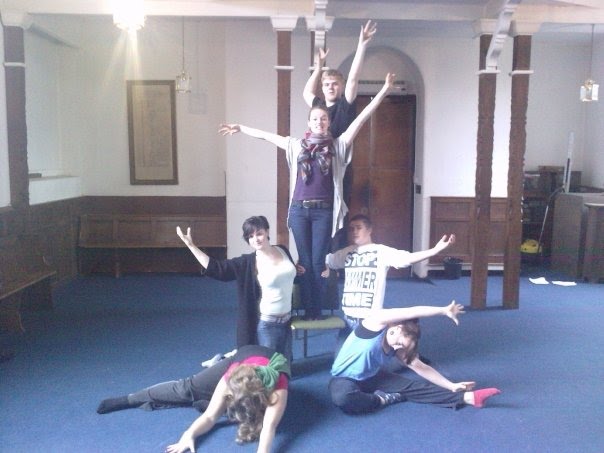
These are the notes taken from rehearsals during the project. I have bolded areas of importance for me personally. Photos taken during rehearsals and devising.

12/01/10

First rehearsal with completed script.
- must be completely sure with the script otherwise script must be altered
- new song for rainbow crow, new tune, learn song know it
- main tain that energy
- try not to adlib

Personal improvements
As this was one of the last rehearsals it starts become very tense and with the confusion of the script and your own way of devising the intial narration one must be sure which one to go with.
Other circumstances this rehearsal lead to change of certain circumstances leading to new castings more roles. Therefore learning narration of rainbow crow personally I would prefer to go by the script seeing as this has been so late in the day.


5/01/10 - Shown to Chris L/loraine/Chris W
- Learn song completely
- neutral stance
- Always energy
- take the risk
- always maintain the focus on even off stage
- No talking off stage
- Sort how the apple will be placed on and off stage
- Snake Link
- Coyote make more of a sound
- add a sound or visual for "quickly animals are coming"
- marry was the narration is to the physicality
- bring back the music
- narration for eagle
- horse spacing - sort narration overal for pigian warrior
- use the costume to house the snow fabric
- opening the clouds sound effect
- work together for billowing clouds
- narrator talk out to audience- develop echo in well
- make more of losing tail
- spin weasel
- buffalo music
- narration music

Personal Improvements
Continue to develop animal physicality and maintain both on and off stage,
aware of spacing throughout as narrator and as animal
more energy throughout.


15/12/09 - Shown to loraine

- Sort out the fabric too messy
- Further Chris Walker animal work
- Narrators in cue with eachother, no gaps, more narration
- Music for Coyote and the snake
- Pick up Pace
- Narrators share with audience, move away from the side
- Deal with the singing of rainbrow crow
- Discuss with Chris, animals react with rainbow crow
- Put more focus on Lakota and the Eagle
- Upstaging each other/ Notice Blocking!
- Woman in the sky
- More humour in the rabbit loosing tail
- Buffalo too many, 3 People not needed
- More music in Buffalo
- Can musicians hand headdresses rather then characters
- Get sticks off stage, clean up
- Need music for returning storyteller

Personal Improvements from rehearsal
- Need to become more confident with the narration
- Aware of staging avoid blocking
- narrators sing with rainbow crow
- clearing stage correctly
- making rabbit more humourous
- Overal further animal work


Nov- Dec 09 Shown to Chris W

- fluidity with the warriors,
- too one sided on stage
- get to position early no fidgiting
- one movement
- wings need to be on time
- set a posture
- need to be on cue
- more music
- storyteller more music/magic
- still too still(hummingbird)
- Tree one movement
- music needed
- oragnise thistle bush
- more movement
- don't restrict arms too much
- flowers set pattern,simple routine
- work on coyote movement
- more music/ no dead noise
- change the levels between narrators and animals
- bring the clouds
- Use the space

Saturday, 12 December 2009

Moving with the animal research

So far we have experimented with animal movements but we haven't used the research to the limits.
Today we focused on the animal movements with Chris W. It was centered on getting the animals right. So far the animals that I have worked on with Chris has been the horses.
The original idea for the horses was to use walking sticks to imitate the legs, however doing this does not capture the stature and physicality of the animal.
therefore we needed to delve deeper into the animal.

Then I thought of how horses have been presented by humans when on stage. An example of this was "Equus" where the actors used there whole body to imitate the front half of the animal which was very effective. when seeing it live the horses looked believable and made a great impact on the audience.

(image taken from http://www.international.ucla.edu/cms/images/EQUUS%205.jpg)

The Final interpretation of the Horses


Rabbit

Working with the Chris on the rabbit was to plan a scenario for the rabbit and reasons for their actions. Therefore i experimented with the rabbit stopping starting the jumps but making it a definant "rabbit jump" rather than a jump. I looked at some videos of rabbits and picked up on the sequence jump, jump look up.

The movement of the Thistle bush and flowers


The original concept of the thistle bush was a line with fabric however the technical side of moving the fabric did seem impractical at most times and the thistle bush did lose the sense of being a bush. When speaking with Chris we discussed the movement of the bush as being a similiar movement of scholing fish, overlapping one another, and one movement, cascading into one another. I did some further research of scholes of fish and their movement in order for us to interpret our own. (consult schooling fish video botton of page)

Designing Masks, Making Masks, Painting Masks

We are not just performing the show we are helping with all elements with the help of technical crew, stage managers and costumiers. My task in the group is mask designer this is where I work with Penny the costumier to design the masks that will be used in the show.

Step ONE
As I had to keep with Native American theme i researched their outfits and headresses they used for dances, festivites or everyday life. Also to research the animals to give traits of their physical appearence.


Step TWO
With these images and the research I could design the masks and begin to make smaller tryouts.
These tryouts are not the set layout but give an idea on how they are two be made.


Step THREE

With my mini designs Penny used the template to enlarge them to scale and simplifying the designs.

Process-
-First Draw a design that would not involve to many seperate pieces but was still easy to work with.


- Next is to bind the shapes together, we found it easy to use office equipment to attach papers, it does not restrict the movement of the mask but still is secured easily.


- Using the heat gun you can then manipulate the plastic to any shape, this really worked well for ears, beaks and whiskers.


- A few of the masks before painting.


Claire wearing Crow


Sophie wearing Horse

Periodical Evalutation- Video Review

So far we have done one rough run through which was filmed so we could review it.
After reviewing the video we made notes of improvement to improve it, these are the notes made by the group so far.


Points taken from Video and notes

- experimenting with the movements
- remembering that it's a kids show, appeal to the children
- bring in more magic
- more music
- make it funny
- getting the right pace for the show
- keeping to the original style

Saturday, 28 November 2009

Children's Show- Songs and Music

Firstly this section was part of the original research but we wanted to use natural sound rather then having the input of technical involvement.
We listened to CD's of native music and broke it down to the native beat of the music.


One stage when we wanted the involvement of music we used the CD's then picked out the beat which gave us a start with the music.
Common musical instruments used was, sticks, drums, flute, and rattle. these instruments contributed well with the movement of the animals too.
Songs were written but needed the groups involvment whether the songs felt appropriate to the theme and style. Wr altered them in areas where it felt that the voice was too western and had that native vibe. Then devided the stanzas into sections to have the involvment of the movement.


Opening verse extract-

"Real dreams know the way, dreams gone foul get stuck and stay,
in that web shall be kept safe for dreamers as she slept,
Sweeter dream will pass on through til it finds the heart of you,
with you feathers it shall play til the joyful light of day"

Tuesday, 24 November 2009

Children's Show - Animal Research

Now that we have established the animals that are to be featured in the show, I have researched the animals that I am to be portraying.

Rabbit- HOW THE RABBIT LOST HER TAIL

In this story I will have to change the physicality of the rabbit, as the story progresses. During a run through of this story it was suggested that I need to highlight the change from the rabbit having her front legs to loosing them.
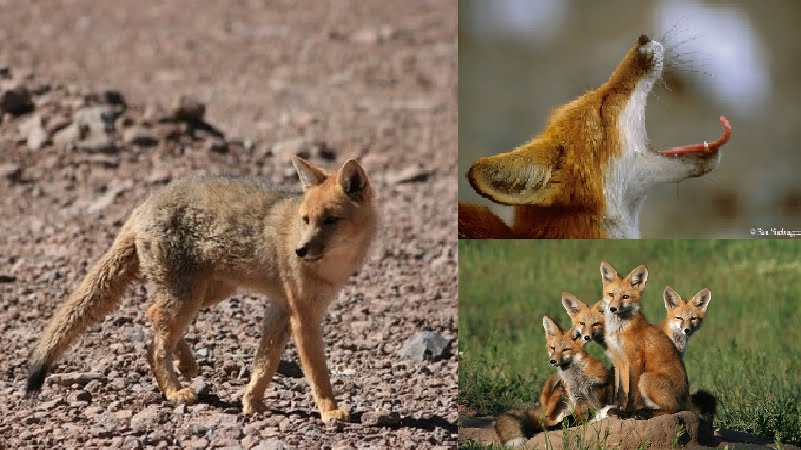
As the rabbit starts with a long tail I have this impression of the rabbit being rather fox like at the beginning.


Points taken from the fox picture:
- physicality from the body movement; emphasis of the tail
- creeping, the sensation of prowling, the lightness on the paws.

Once the rabbit looses her front paws and her tail I must adopt the characteristics how the rabbit is represented traditionally. I have researched the movement both during rehearsals and outside rehearsals, the rehearsals has brought in the outsider observation.


Points from the Pictures
- the movement of the hind legs
- the propulsion of the rabbit hop.
- the hesitation of the rabbit, checking the surroundings before proceeding

Horses- THE PIEGIAN WARRIOR


Wild Horses from BBC Wildlife (available bottom of page)

Points taken from the Video

The wild horses attitude to humans relates a lot to the piegian warrior story.
- the hesitation of the horses
- how the horses defend themselves, stepping out, leaping, change of pace, reaction to one another.
- the physicality of the horses, flicking of the head, shuffling of the hooves, grunting.
- the idea of using the head as a defence mechanism.

Wednesday, 4 November 2009

Children's Show - Exploring movement with physical theatre

Tree Physicality

Physical theatre to create the stories, in the Heron and the Hummingbird we have chosen to use physical theatre to create the surroundings so far we have experiemented with the physicality of the tree.

Method:One

This tree gave a great deal of height for the tree, however a block would be needed to evaluate the height. The need for the block would become an obstucle when there was a stage changed during the story.

Method: Two

This was easier to manouver but lost the height and the impression of the tree with the branches etc.

Method: Three

Out of all the methods this one proved the most creative, the disadvantage was the handstand as the speed of the change of movements may prove the handstand to be unsuccessful especially for the stands conditions.
We are experimenting further to continue the creativity of the movement but accomadating to the stage conditions.

The Warrior Physicality

We have established are opening scenes so far, which uses a lot of movement. As the opening scene many of us come out as Native American hunters, I have looked at the movement of native americans on the prowl, I have incorporated it into my native american hunter.

Image taken from (www.paganspace.net/profile/Brandon47)

From this I can judge the stance of the 'Hunter' as well as his movement and his approach to hunting, stalking your prey, light footsteps, using your weapon.

Jasmin Vardimon Workshop - 10 NOV 09

This workshop although a dance based workshop worked well with the movement experimentation side to the children's show. One of the exercises on the work shop was to imitate the movement of the snake with your hand but the involvment of the whole body. Although I do not play a snake character it did help alot with involvment of the whole body. Also gave a lot more confidence to just do the movement and see what happens.

ESTELLE MOVEMENT SESSION NOV 09

With the warrior movement we have worked with Estelle on a variety of movements in particular with the prowling and hunter presence worked well with the native theme. This session worked really well when incoporating the music into it as well. I learnt a lot from this session with the involvement of someone elses specialities and ideas. It provided a stepping stone to lead off from.